An all weather US flag is made to stay up when the forecast turns rough, but winter tests it hardest. Most flag owners know the scene. An ice storm moves through overnight, and by morning the flag hangs stiff and heavy, frozen to itself while the wind tugs at the fly end. It survived, but the fabric paid for it. Here's what "all weather" really means and how to get your flag to spring in good shape.
What All Weather Really Means for a US Flag
The US Flag Code says the flag "should not be displayed on days when the weather is inclement, except when an all weather flag is displayed." So an all weather American flag is the one you can keep flying through rain and snow.
The Code doesn't name a fabric. In practice, an all weather flag is a synthetic that sheds water instead of soaking it up, so cotton and ceremonial flags belong indoors this season.
Nylon vs Polyester Flag Material When It's Freezing
Nylon is light and dries quickly, which helps reduce ice buildup. Polyester is heavier with a tighter weave, making it the heavy duty American flag choice for hard wind, though it holds moisture longer. For most homes, a 3x5 nylon American flag is the easy choice. Ask anyone who sews flags: in a hard winter, the stitching usually gives out before the cloth does.
Flag Pole Lights for Long Winter Nights
Under §6(a), a flag flown 24 hours a day should be properly illuminated at night. Snow on a solar panel cuts its charge, so solar lights can dim early. A wired flag pole lighting system keeps your flag lit through the longest nights of the year.
How Snow and Ice Wear Down a Flag
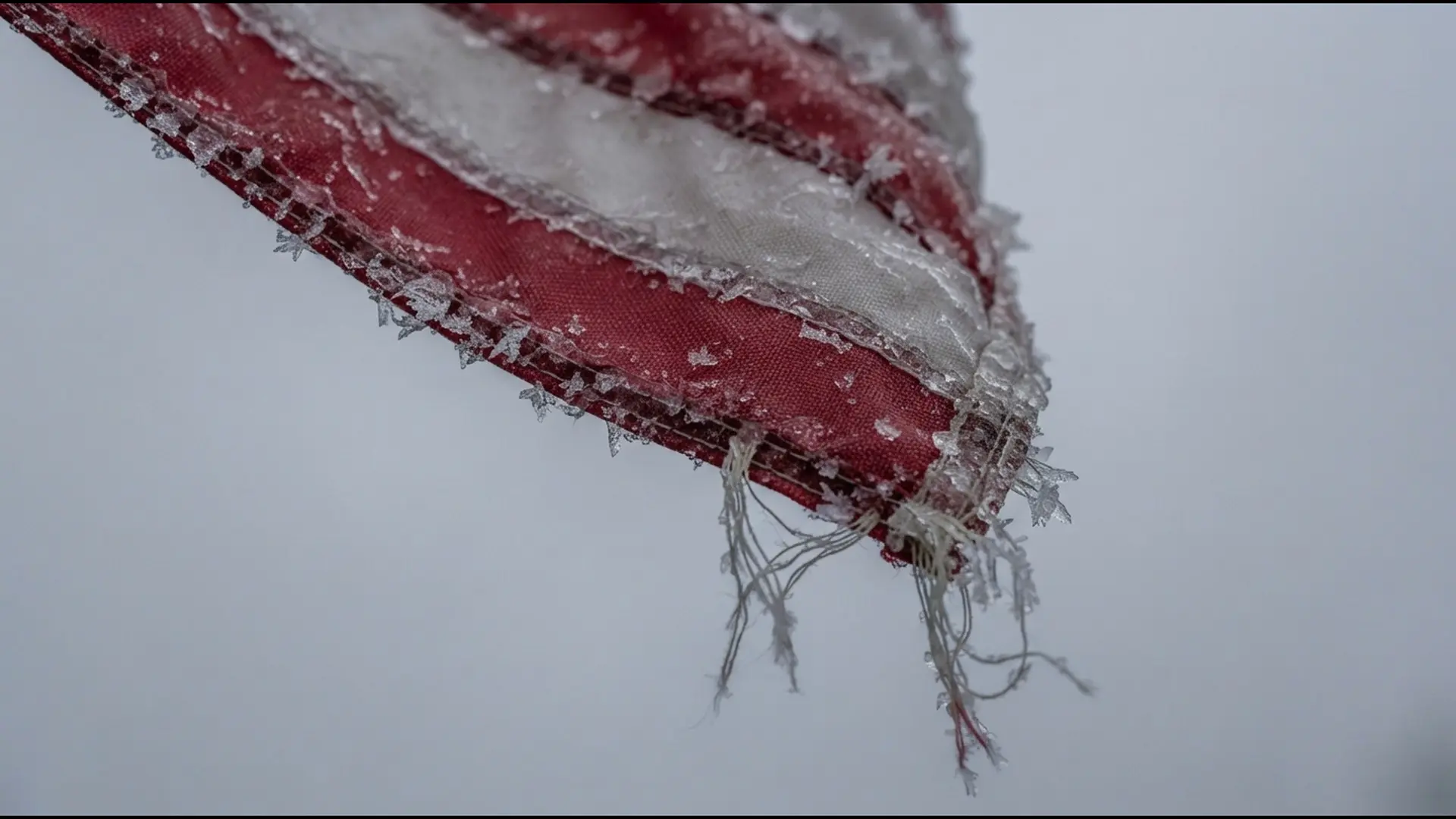
A flag that freezes overnight and thaws by day goes through repeated stress at the fiber level. Those freeze thaw cycles weaken the stitching along the fly end and grommets, and wet snow adds weight, so every gust pulls harder on the same seams.
Frozen fabric is stiff, and stiff fabric tears more easily in the wind. A loose thread in December can become a torn American flag by February if nobody looks up.
What to Do With a Frozen or Soaked Flag
Lower the flag gently, bring it indoors and let it thaw on its own. Then lay it flat or hang it somewhere with good airflow. Skip the heater, the dryer and wringing, and never fold it damp. A flag folded wet and left in a closet until spring rarely comes out the way it went in.
Keeping Your All Weather US Flag Safe in High Wind
Cold air is denser than warm air, so the same wind pushes harder in January than in July. A high wind American flag needs the right size: its long side should be no more than about a quarter of the pole height. In an open yard, drop one size for winter, say from 4x6 to 3x5.
Wind also wraps flags around the pole. Brass swivel snaps let the flag turn freely, and a flag unfurler ring helps on bracket poles. Our guide on how to keep a flag from wrapping around the pole covers both.
When Even an All Weather Flag Should Come Down
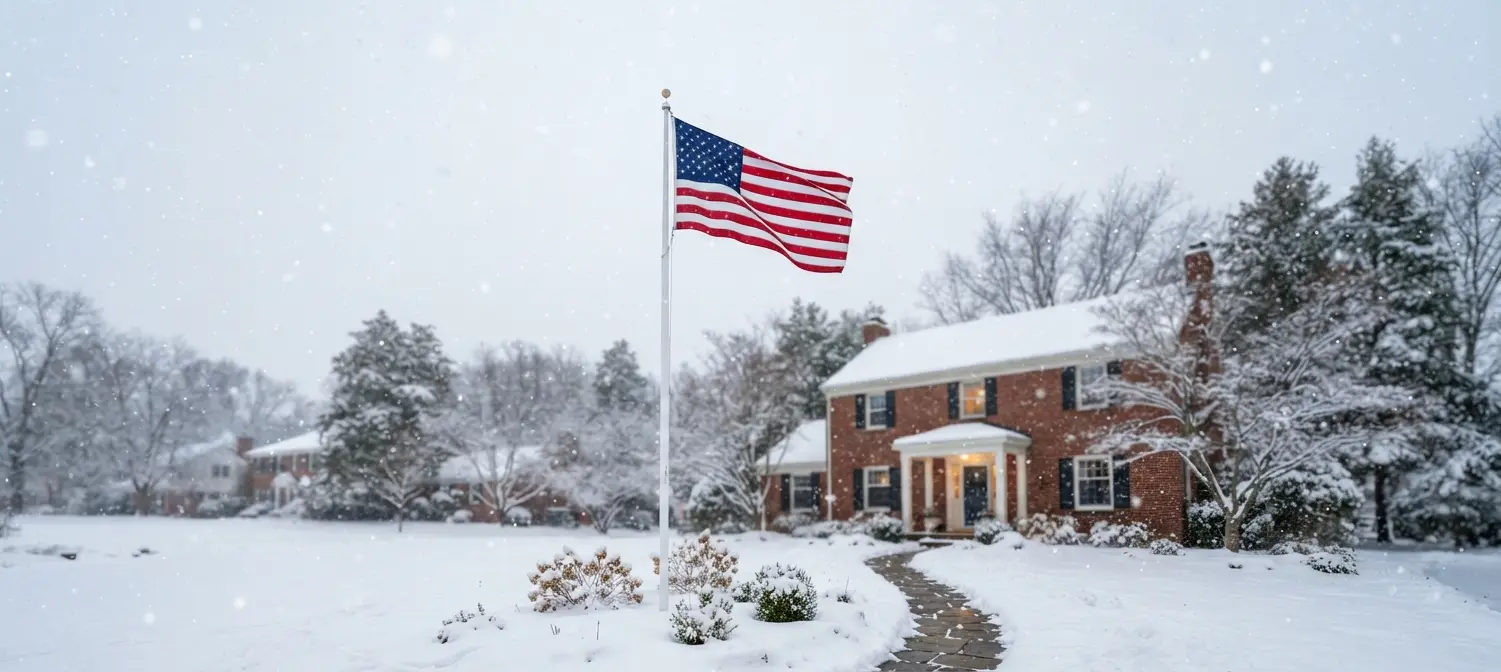
All weather doesn't mean every weather. Freezing rain is one of the hardest conditions on any flag, and ice storms and blizzards are reasons to bring it in. Taking a flag down to protect it isn't disrespect. It's care.
Frayed, Torn or Fading: Your After Winter Checkup
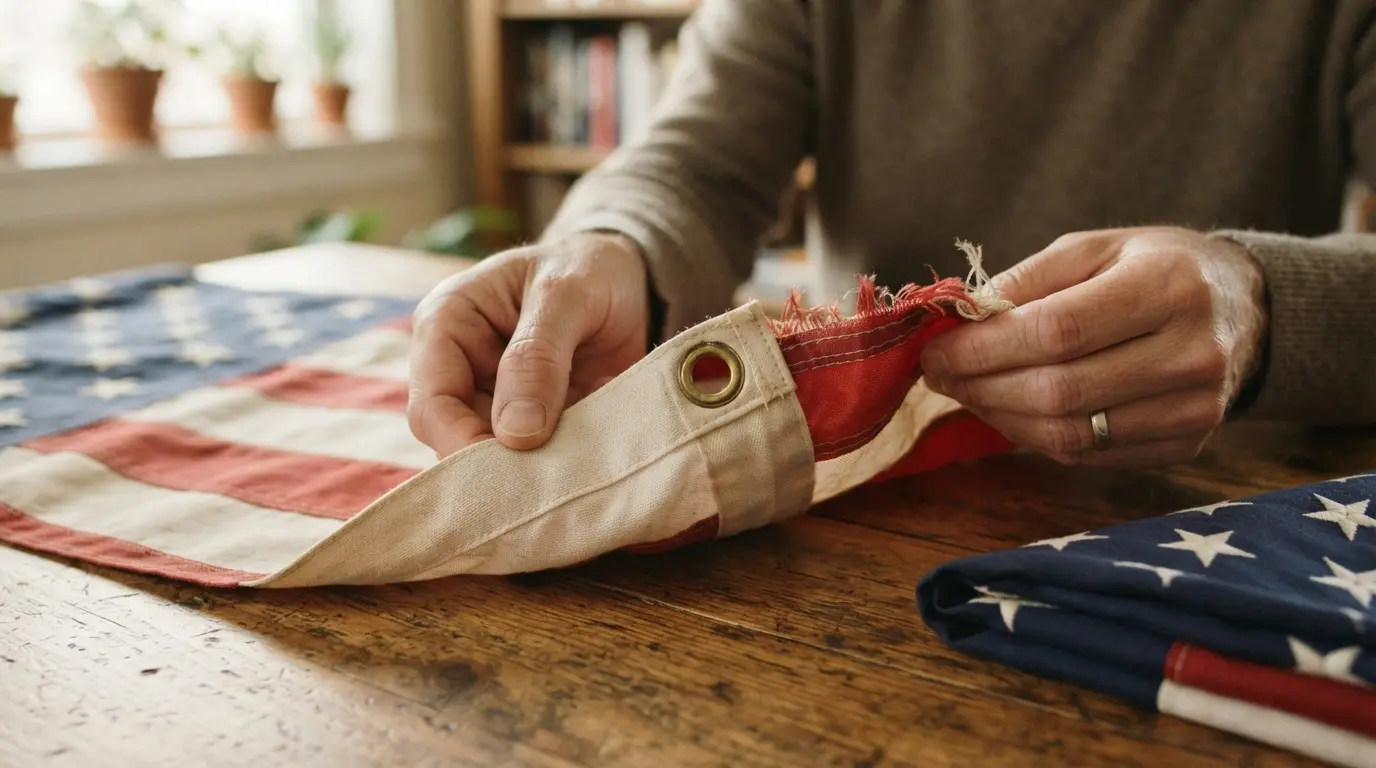
Once winter passes, take your flag down and look closely. Road grime, salt and wind leave marks you won't notice from the porch.
Quick checklist:
- Check the fly end for a frayed flag edge
- Look closely around the grommets and header
- Hold it to the light to spot thin areas
- Compare it to a newer flag to catch a fading American flag early
Trim small frays before they spread. Larger tears may need patching, and a flag past saving should be retired with respect. For the full routine, see our winter flag care checklist and 10 ways to extend flag lifespan.
Can You Wash an American Flag After Winter?
Yes. Snow and road salt leave grime that dulls the colors. Wash it gently by hand with a mild soap, rinse well and let it air dry completely before folding or flying it.
Keep Your Flag Flying Proud All Winter
Choose the right fabric, size it for your wind, light it at night and bring it in when ice moves in. The durable American flag that still looks good in April is the one somebody checked on.
FAQ's
Yes. Nylon dries quickly, which helps limit ice buildup. In windy spots, a heavier polyester flag may hold up better.
In light snow, yes. The Flag Code allows an all weather flag in inclement weather. Bring it in for ice storms and blizzards.
Only if it stays up after dark. The Flag Code asks that a flag flown 24 hours be lit at night.
Ready to get your flag through winter? Shop Now for outdoor US flags in every size.
All Weather US Flag Care: Your Winter Survival Guide