The role of the government in placing flags is much more than mere decoration. A flag is not just a piece of cloth, it is the symbol of the authority, sovereignty and citizenship. The location of that flag can convey respect, power, and unity or it will send the unintentional message of weakness and disrespect. Governments establish strict protocols regarding the flags to make sure that they are displayed in manners that portray dignity and national values. Any minor error, such as locating a flag too low or on the incorrect side would provoke controversy or be offensive to visitors and citizens. This realization of why the officials take such great care in the arrangement of the flags makes us realize the hidden significance of national signs and their influence on the society.
The Role of Flags in Expressing National Identity
One of the most powerful symbols of national identity is a flag. It informs the citizens and foreigners of what the country is, and what it is about. Governments erect a flag in a high profile location, and they are expressing their cultural pride, their history, and their values. Placing flags enhances cohesion among the citizens since it is a visual expression of common traditions and ideals. To foreign tourists, the flag sends a message of a nation being serious on its sovereignty. Simply, the national pride and the feeling of belongingness among the population is enhanced by the appropriate positioning of the flags.
Flag Protocol and Government Regulations
Governments do not entrust placing flags to chance. There are strict flag measures contained in official documents. These regulations include all the aspects of which side of the building is supposed to be flagged on, how high the flag is to be raised, when the flag is to be raised and when it is to be taken down. The strictness in following these rules makes the flag a symbol of respect, power, and tradition at all times. All these protocols should be observed in public offices, schools, military bases, and sometimes even in the case of a private institution. Knowledge of flag protocol can ensure consistency and avoid confusion that may come as a result of incorrect placement of flags.
Common Rules in Flag Protocol Standards
Other rules, such as making sure to raise the national flag higher than any other flag, not letting it touch the ground, and lowering it during mourning times, are common. Such standards might appear to be mere, yet they have some symbolic meaning. Violation of these norms may send a bad signal by mistake or offend some people, so it is a significant task of any state agency to follow flag protocol.
How Flag Placement Affects International Diplomacy
Flags play a very important role in international forums like embassies, summits and conferences. The wrong placement of a flag can be described as disrespect towards a different nation. Governments are attentive in the deployment of flags to ensure that they have good relations with foreign leaders. The proper positioning of the flag shows professionalism, dignity and diplomacy. Any slight slip in the placement of a flag at an international event can result in strain or a news story. This indicates how gravely governments take the issue of placing flags in the global relations.
The Importance of Flag Etiquette in Public Ceremonies
Proper flag etiquette produces an aura of orderliness and sobriety during the time of public ceremonies. The flag is used as the centre of unity and respect through parades, national holidays, and official inaugurations. The governments make sure that every flag is placed in the right manner to uphold dignity and honor traditions. Right placement of the flags in such circumstances will enable the citizens to feel affiliated to the history of the country and creates pride in huge celebrations.
Flag Etiquette at Governmental Affairs
During formal occasions, the national flag is usually put on the right of a speaker or in the middle of a stage. In funeral times, it is drawn down half-mast. Military rituals demand exact flag angles and alignments. These instances indicate that adherence to flag etiquette is not mere ritual, but it strengthens respect, tradition, and national identity in a graphic manner.
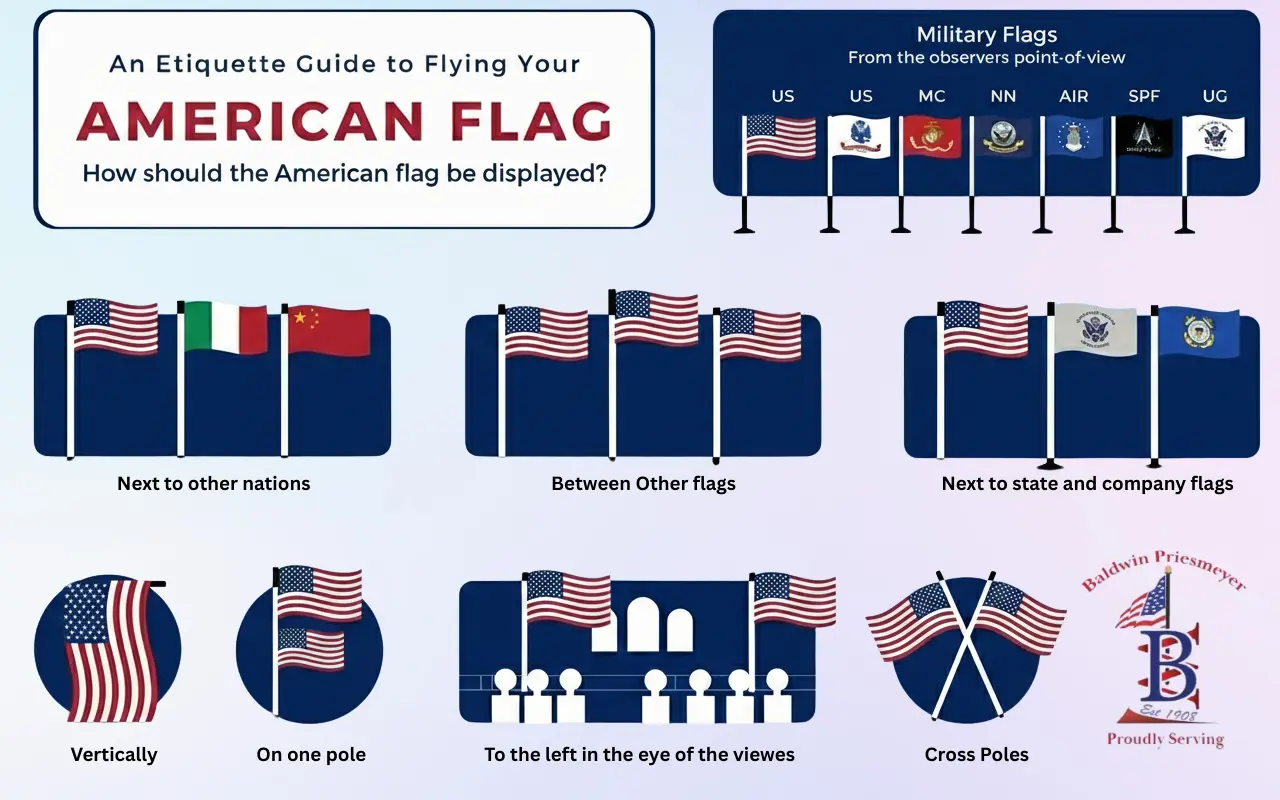
Legal Implications of improper flag placement
The laws safeguarding the flag are enforced in many countries. Failure to put the flags at the right place may translate to fines or penalties. Legal regulations can also encompass commercial usage, display to the people and ritual regulations. With the implementation of these laws, governments maintain the authority and symbolic power of the flag. Compliance with such standards ensures that people do not exploit them accidentally and mistreat them without damaging the image of a nation. The legal implications reveal that the location of the flag is not only symbolic, but it is also a national concern.
How Citizens Interpret Government Flag Placement Choices
People pay attention to the positioning of the flag as a sign of the government attention and admiration to national symbols. Properly raised flags bring confidence and pride, whereas faults may become the subject of criticism or discussion. These visual signs are used by the public to judge seriousness, observance of details, and respect to tradition. When governments place the correct emphasis on the location of flags, they enhance the trust and show that national symbols are important and that governments have a greater bond with the citizens.
Why Flag Placement Matters to Governments