Well before the 50-star American flag was first hoisted over a united nation, a great collection of banners, ensigns, and battle flags shared the story of 13 determined colonies who were fighting for their freedom. The flags of the 13 colonies are more than just old fabric. They evoke feelings of rebellion, unity, courage and the creation of the greatest democratic experiment in human history.
If you enjoy history, flag collecting or just love the story of our early history, learning about these colonial flags will help you appreciate the Stars and Stripes that flies today.
Why the Flags of the 13 Colonies Still Matter Today
From Colonial Banners to the Stars and Stripes
The first American flags of the colonial period were not just made up flags. Each one was an intentional message, warning, statement or call to unity. They zoomed over forts, ships, militia camps and town squares in one of the most defining eras in human history.
In the year of America's 250th anniversary in 2026, these historic flags are more relevant than ever. They tell each American where this country originated, what it took to make it, and what values were worth fighting for. This year, it's one of the most significant ways you can honor the founding generation by displaying your Colonial era flag with your American flag.
The First Flags Flown Over Colonial America
The Kings Colors and the British Red Ensign
Prior to the Revolution, the colonists of the 13 colonies used flags that symbolized their loyalty to the British king. The most noticeable was the Kings Colors flag which was designed in 1606 when King James united the Scottish and English kingdoms. As a symbol of British rule, this flag was displayed on colonial government buildings, ships and forts.
It was accompanied by the British Red Ensign or Red Duster, the official civil flag of British merchant vessels. For years, these British flags were everywhere, but as they grew more agitated with England, the colonists had to develop symbols of defiance and identity of their own.
The Grand Union Flag: Americas First National Banner
At Prospect Hill, on January 1, 1776, as part of the Boston siege, George Washington hoisted the Grand Union Flag. The flag's 13 alternate red and white stripes represented the colonies while the British Union Jack in the canton represented unity among the colonies, but also the hope for reconciliation with Britain.
The Grand Union Flag is the first flag to be used by a combined force of all 13 colonies. A Dutch fort was the first to acknowledge the American colonial effort by saluting the American warship "Andrew Doria" in a salute in 1776.
The Most Iconic Revolutionary War Flags
The Betsy Ross Flag and the Circle of 13 Stars
The Betsy Ross Flag, featuring 13 stars in a perfect circle in a blue field with 13 red and white stripes around it, is perhaps one of the most well-known colonial flags. It is said that this flag was sewn together at the request of George Washington by Philadelphia seamstress Betsy Ross in 1776, where the stars were formed by cutting them out of a single sheet of paper with scissors.
Historians have been debating whether or not the Betsy Ross story is completely true, but the flag itself was one of the most powerful symbols of a new nation finding its identity. It is still a cherished American flag history 1776 item today, and is proudly displayed by collectors and patriots.
The Gadsden Flag: Don't Tread on Me
The Gadsden Flag was the flag that embodied the spirit of the American Revolution more than any other. This yellow flag with a coiled rattlesnake and the words "Don't Tread on Me" was given to the Continental Navy in 1776 in honor of South Carolina's Colonel Christopher Gadsden.
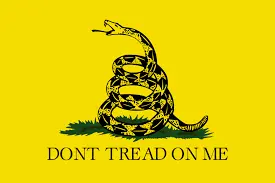
The phrase the rattlesnake was a uniquely American symbol became popular due to Benjamin Franklin. Not a first strike but a warning. This was precisely the message the colonies wished to send to Britain: we are patient, we are reasonable, but we shall defend ourselves! The Don't Tread on Me flag is one of today's most well-known and most widespread historic flags in the United States.
The Sons of Liberty Flag and Its Striped Legacy
Sons of Liberty Flag started with nine red and white stripes, representing the nine colonies which convened at the 1765 Stamp Act Congress. As the revolution progressed four additional stripes were added, making them horizontal and including all 13 colonies.
The striped pattern had a direct effect on the Grand Union Flag and more later on the Stars and Stripes. The red and white stripes on the American flag today have their origins directly tied to the bold resistance of the Sons of Liberty to British tax.
Other Notable Flags of the 13 Colonies
The Bennington Flag and the Battle of 1777
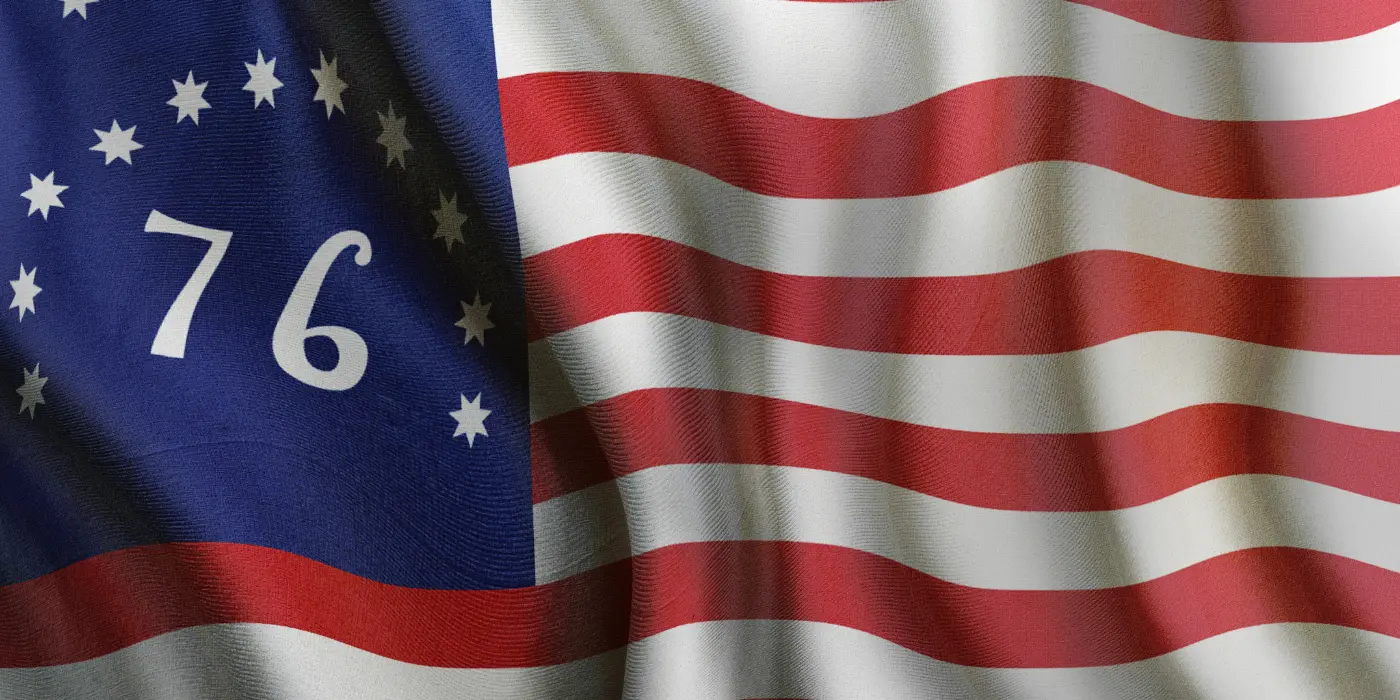
The Bennington Flag was flown in the Battle of Bennington (1777) and is among the most unique Revolutionary War flags that remain. It is adorned with 13 stars and stripes, and the number "76" is prominently visible, representing the year of independence. Its size and the specific design with white bands above and below and across with blue bands, made it different from later American flag designs.
The Bennington Flag was one of the important patriotic successes of the Revolutionary War, in which militia troops beat back a British raiding party and lifted the spirits of the colonists at a crucial stage in the Revolution.
The Pine Tree Flag and the Appeal to Heaven
One of the more popular colonial flags in New England was the Pine Tree Flag, a white flag with a green pine tree and the words "An Appeal to Heaven. The pine tree was a symbol of New England resistance and the Massachusetts Merchant Navy and was used to signify strength, resilience and belief in divine providence to the colonial cause.
In recent years, the Appeal to Heaven flag has enjoyed a remarkable renewed popularity in America, as Americans return to their revolutionary past.
How the American Flag Evolved From 13 Colonies to 50 States
The Congress of the United States passed the first Flag Act on June 14, 1777, stating that the flag of the United States should have 13 stripes and 13 stars symbolizing a new constellation. This resolution initiated a design evolution that was one of the most incredible of all time!
New states were admitted to the union, and new stars were added as their states entered the Union. The flag that flew over Fort McHenry in 1814 and inspired Francis Scott Key to write the Star Spangled Banner had 15 stars and 15 stripes. In 1818 the Flag Act was passed, which set the number of stripes at 13 (to commemorate the original 13 colonies) and introduced the system of adding one star for each new state. This tradition has continued to this day and the 50 star flag has been unchanged since 1960.
Where to Find Premium Historic American Flags Today
Baldwin Flags is the leading provider of historic flag reproductions in the United States, having inspired you with the story of the 13 colonies, you can now proudly display one of these amazing historic flags. Located in St. Louis, Missouri, Baldwin Flags has proudly served their customers since 1908, and they have a wide variety of historic flags including the Betsy Ross Flag, the Gadsden Flag, the Bennington Flag and more.
All of the historic flags from Baldwin Flags are made with the best materials, fade-resistant dyes and reinforced construction to withstand all weather. These flags are a link to the founding spirit of America for the collector, history teacher, or patriotic homeowner.
FAQs About the Flags of the 13 Colonies
What flag did the 13 colonies fly before the American flag?
The most common flags were the Kings Colors and the British Red Ensign, reflecting colonial ties to Britain. As revolution approached, the Grand Union Flag became the first unified colonial banner.
Who designed the Betsy Ross Flag?
Legend credits Philadelphia seamstress Betsy Ross with sewing the first flag featuring 13 stars in a circle at George Washington's request in 1776, though some historians debate the details of this story.
What does the rattlesnake on the Gadsden Flag mean?
The rattlesnake was a symbol of American resilience and warning. It represents a creature that does not strike first but defends itself fiercely when threatened, perfectly capturing the colonial attitude toward British rule.
Where can I buy authentic reproductions of colonial flags?
Baldwin Flags offers a premium collection of historic flag reproductions including the Betsy Ross, Gadsden, Bennington, and Sons of Liberty flags. Visit www.baldwinflags.com to shop the full collection.
Ready to buy historic American flags and bring a piece of the Revolution to your home or business? Visit Baldwinflags.
Flags of the 13 Colonies