A State Born From History
Colorado's journey to statehood laid the foundation for everything that would eventually become its most recognizable symbol
Colorado Statehood and the Need for a Symbol
Colorado was officially the thirty-fifth of these United States as of August 1st, 1876, a hundred years after the US said it was free, and because of this it gained the very fitting title of Centennial State. Colorado Day is still marked every year on August 1st. As the state expanded and started to define itself, having an official symbol was increasingly important. A new state like Colorado required something for people to feel united by, something to represent the landscape, the heavens, and the character of the area. And that is what the state flag would ultimately be.
The First Flags Nobody Knew About
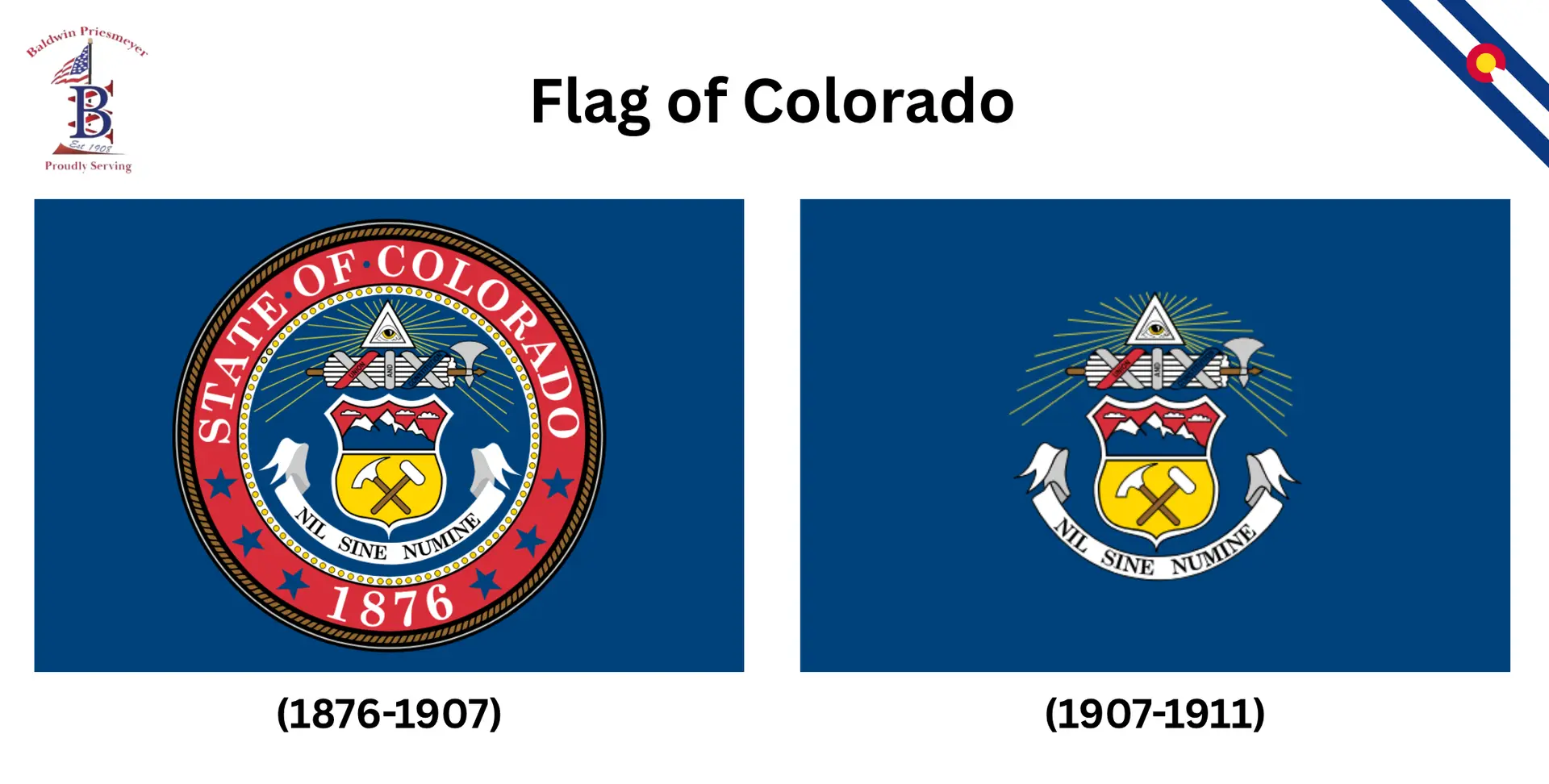
Before Colorado had the famous flag it does now, it had two flags that almost completely disappeared from view. Both of them had the Colorado state seal as the main feature, and neither was really used in public, so they weren’t very well known. They both quietly faded into obscurity without ever making a real public appearance.
The 1876 Unofficial Flag and the 1907 State Seal Design
This is where the story takes a bit of a turn. Colorado surprisingly had two flags before the current one, and very few people have any idea they ever did! The very first one, and it wasn’t official, was flown from 1876 to 1907. It was pretty basic: a blue background with the Colorado state seal right in the middle. In 1907 a second version was used which included the words Union and Constitution in the center along with “Nil Sine Numine” (Nothing Without Providence), all surrounded by the state seal.
The problem? The only copy of that 1907 flag was sitting unused in a janitor's closet at the State Capitol. It had never been displayed publicly, and almost no one in Colorado even knew it existed.
The Daughters of the American Revolution Step In
The DAR was also a key force in directing Colorado toward the final version of the flag that would truly have meaning for its citizens. Their 1910 proposal, based on the mistaken assumption that Colorado had no flag, sparked the redesign.
The DAR‘s 1910 Meeting and Early Design Proposals
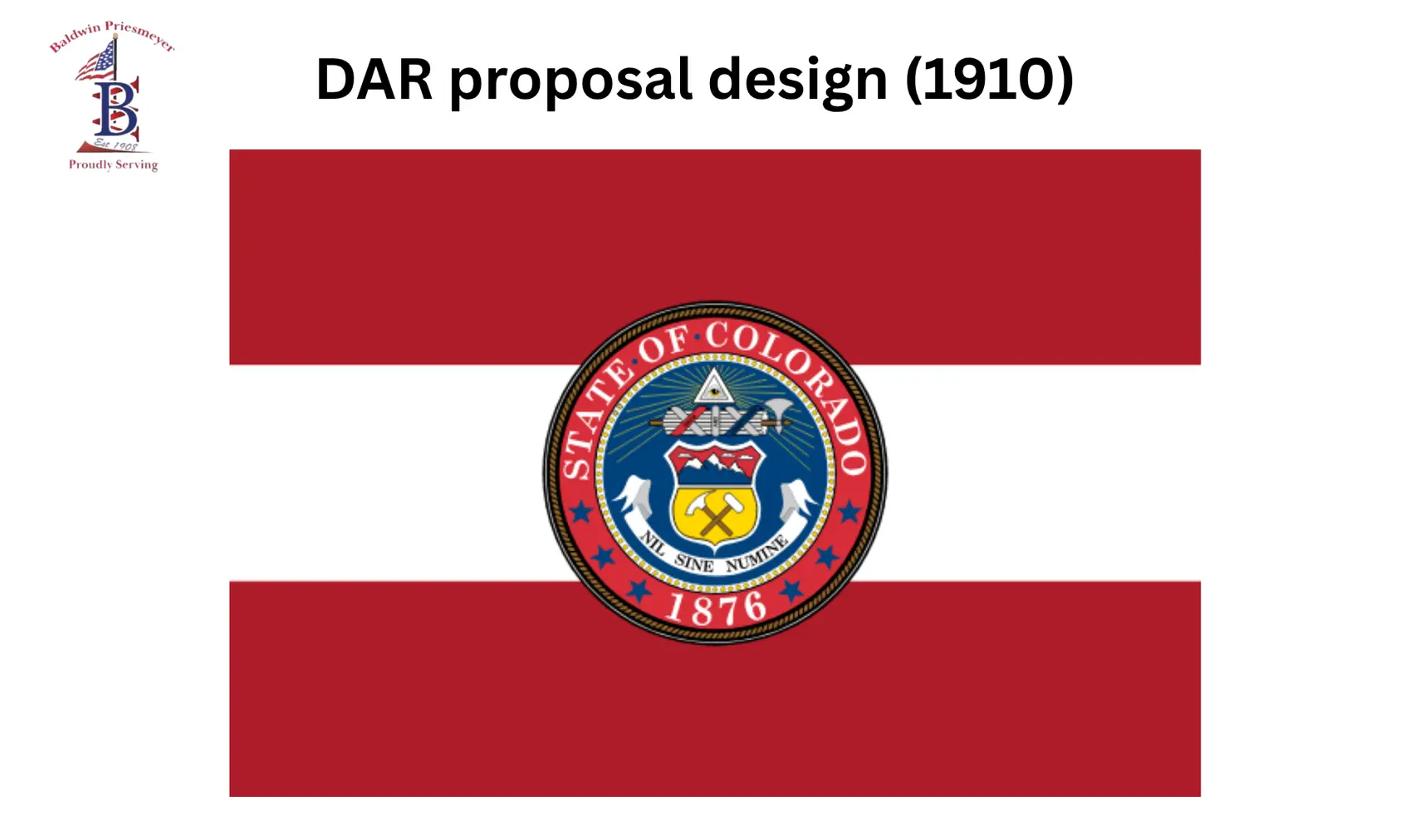
On November 14, 1910, the Denver chapter of the Daughters of the American Revolution (DAR) convened in private residence on Lafayette Street. These women realized that Colorado did not have any state flag whatsoever, and were committed to this passion. Their rally cry expressed it perfectly: “State loyalty is too precious ever to be lost.”
In just a matter of weeks, the FLAG committee in the DAR was down to one last design, which called for a three-stripe horizontal design with red on the outside, white in the center, and the state seal centered in the design. They presented the design to the state legislature, supporting the idea of the flag, but throwing out the actual image.
Andrew Carlisle Carson and the Winning Design
When the DAR‘s plan failed, the much cleaner, more elegant image of Andrew Carlisle Carson emerged and was accepted by the legislature nearly immediately. It is this design that graces the flag of Colorado today.
How Senate Bill No. 118 Gave Colorado Its Iconic Flag
Enter Andrew Carlisle Carson, who submitted another design that was revolutionary. Carson wanted two horizontal stripes of Yale Blue and a white center stripe with a giant red “C” surrounding a gold disc closer to the pole side of the flag. The legislature approved.
On April 25, 1911, the state Senate approved Senate Bill No. 118 Plymouth without a single dissenting vote. The House followed without a hitch a few weeks later, and Colorado became only the fifth state in the Union with a new state flag on June 5, 1911...a mere five months after that first DAR chapter meeting.
What the Colors and Symbols Actually Mean
The state flag of Colorado is attractive, but it also is representative of the state‘s natural beauty. Each color and corner has a true meaning that is based in Colorado nature and history. When you are aware of the symbolism, the flag is even more meaningful to you.
Red C, Gold Disc, Blue Stripes, and White Bar Explained
The Colorado flag relates to land use and land history on many levels. The blue stripes remind us of Colorado‘s well known blue skies. The white stripe still recognizes the snow covered mountain peaks of the Rocky Mountains, but also the color of Colorado‘s columbine, the state flower. It commemorates the strong Colorado sunshine and echoes the history of gold mining in the state. The red “C” symbolizes the abundant red earth and soil of Colorado and is an initial for the three significant words of Colorado, Centesimal and Columbine.
Fine-Tuning the Flag: 1929 and 1964 Legislation
The 1911 flag bill did not resolve many areas of ambiguity, which resulted in flag production and displays that varied over the following decades before legislation specified the design permanently.
How the Colorado General Assembly Standardized the Design
However, the 1911 flag bill missed its one big detail, as it did not mention specific shades of color or the size of the “C”. This resulted in many years where various flags had a much smaller “C”, that was entirely contained in the white stripe.
Finally in 1929, the Colorado General Assembly appeared again and mandated the red and blue of the flag be the same as the colors in the American national flag. Then in 1964, the last bill finally settled the size debates, determining the gold disk diameter must be that of the entire width of the white stripe. This allowed the red “C” to overlap, as it does today, and helped complete the last of the flag‘s design concepts.
The Flag Belongs to the People
Instead of being relegated for state use only, the Colorado state flag was intentionally penned into law to represent all the people of the state. That inclusive nature is a large part of the reason why it‘s one of the most commonly worn and loved state flags in the entire country.
Colorado Flag Color Symbolism in Everyday Life
The most revealing fact tucked away in the 1911 flag bill is the stipulation that all persons shall have the privilege to fly the flag ” upon such occasions as they may deem fitting and appropriate. ” That wording was an important break from the 1907 bill which only permitted the states to fly the flag.
n a nutshell, any t-shirt, hat, hoodie, sticker, tattoo bearing the Colorado flag is not only culturally popular, but legally favored. Colorado is the only state in the nation to use its full state flag on highway route markers, an understated, yet concrete expression of the fondness the citizens have for the impressive design.
A Flag Worth Knowing
The history of the Colorado state flag is one of happy accidents, civic passion and a design that was put together in a matter of months and has lasted for more than a century. From a long forgotten seal found in a closet to one of America‘s best-wearing flags, it is a visual embodiment of everything the Centennial State means to its residents: sun, mountains, red dirt and a people proud to be living there.
History of the Colorado State Flag: Origins, Meaning, and Evolution