The American flag is not a piece of cloth and thread, but it is a living story of the nation, its development, and its ideals. Since the original 13-star design up to the current 50-star emblem, every one of them narrates a tale of growth, political move, and allegorical meaning. The knowledge about its development provides a clue about the history and identity of America.
To the businesses and institutions, the flag is also a branding and representative tool. Flying the right version of the flag is not only a tradition but a message of respect to the past and details. The history of the American flag is quite an interesting mixture of legislation, design and symbolism which shows how the face of the nation was changing.
The Origins of the Stars and Stripes History
The Stars and Stripes first appeared as a uniting symbol for the colonies that recently got independence.it represented both their shared identity and struggle. The original design of the flag laid the groundwork for a flag that would grow and change with the new nation, combining symbols with the new ideals of America.
The First Official Flag and Early Design Standards
In 1777, the Continental Congress adopted the first official United States flag which had 13 stipes and 13 stars and it represented the original colonies. These early design standards were loosely defined, allowing variations in star shapes and arrangements. Although the flag was not standardized, with some flags having different shapes and arrangements of stars, it became a symbol of unity during the Revolutionary War.
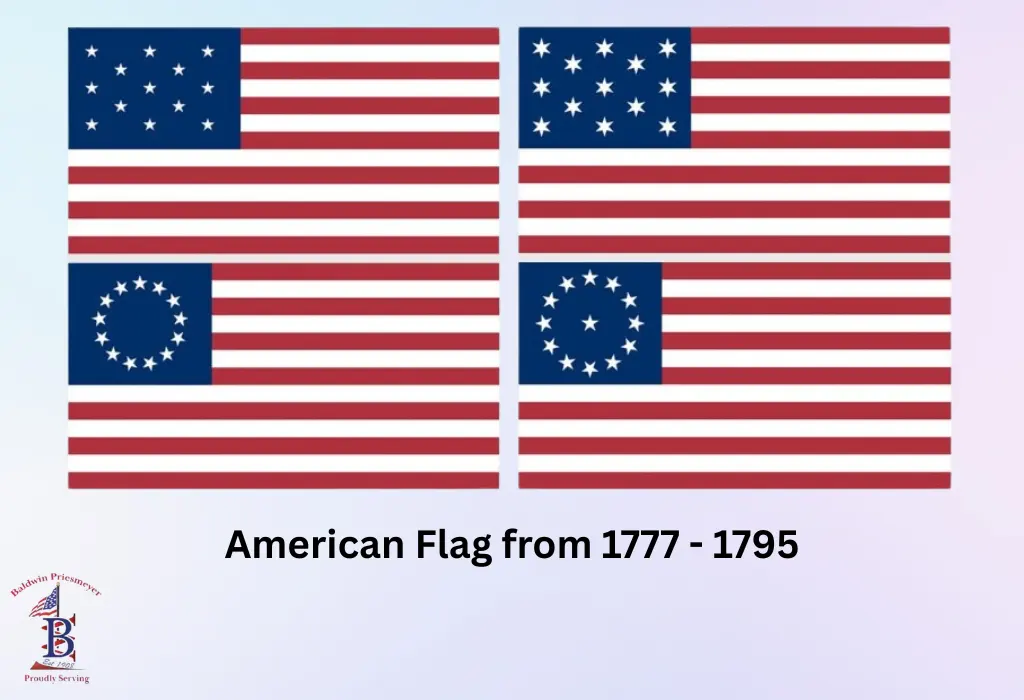
The Second Flag Act and the 15-Star 15-Stripe Flag Design
When the states started growing, the original flag design was not representing the union accurately. However when Vermont and Kentucky were added as new states, Congress understood that the national flag needs an upgrade. This gave rise to the Second Flag Act that added more stars and stripes, 15 in total, declaring the growth of the country, yet keeping the original identity.
Admission of Vermont and Kentucky
By the year 1794, Vermont and Kentucky had become part of the Union, and hence the necessity to recognize the new states in the flag. The new 15-star 15-stripe pattern enabled representation of each state in a symbolic way, which was supporting the notion that the flag was a living icon of the unity and growth of the nation. This was a historic development because the U.S. flag was undergoing a formal change that indicated political development of the country.
Congressional Flag Debates 1794
The Second Flag Act was not passed unanimously. In 1794, the
Congress talked about the way of balancing between tradition and progress,
whether to add new stars or stripes or both. Other legislators feared that the
flag would be overcrowded as stripes were constantly added and others felt that
the new states had to be recognized. These debates highlighted how United
States flag legislation intertwined symbolism, politics, and practicality,
paving the way for future design standards.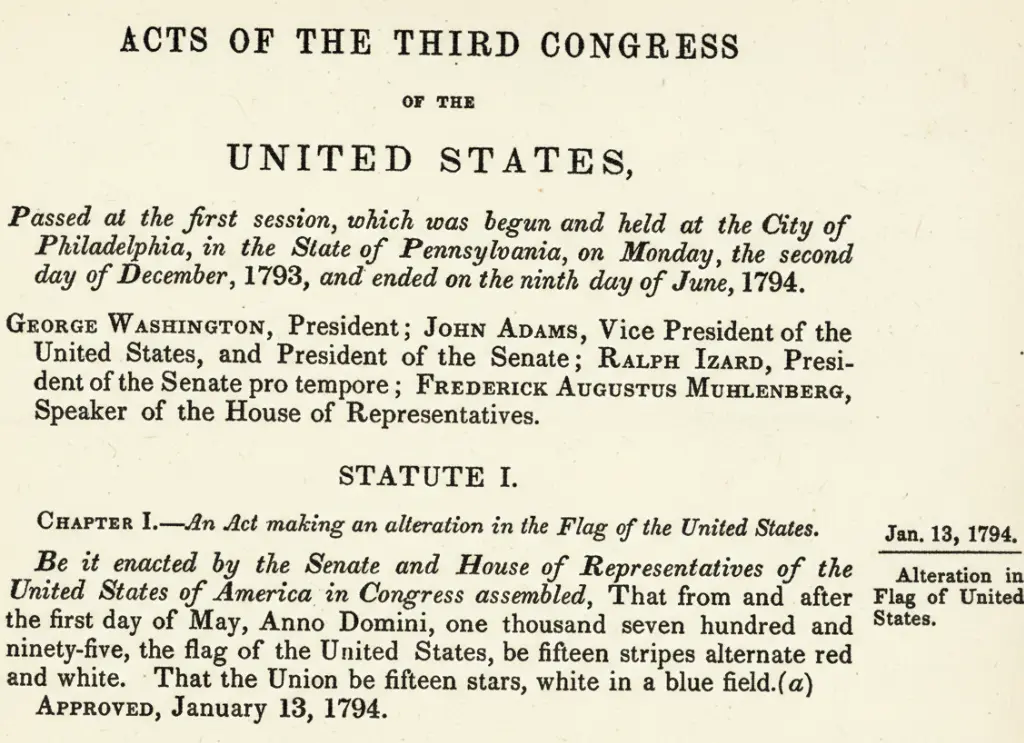
Historical Flag Variations Pre-1818
Before 1818, the U.S. flag had experienced different variations in the number of stars and stripes. The historical flag variations before 1818 were an obvious sign of the process of legislation and interpretations by different regions, which ultimately led to confusion. The businessmen, military, and government institutions had to cope with the different variations, thus signifying the impact of United States flag legislation on the national identity despite the different variations.
The Flag Act of 1818 Amendment and Modern Structure
The Flag Act of 1818 amendment removed the design confusion by providing that the flag would consist of 13 stripes, representing the original colonies, while the stars would represent the number of states. This was the start of U.S. flag design regulations that still exist to this day. The standardization made it easy to display, build, and use in ceremonial life, cementing the flag as a national icon and a referendum on historical faithfulness.
The Symbolism of the Stars and Stripes
The stars and stripes represent complex meanings: unity, growth, and perseverance. Every evolution represents the growth of America and its dedication to the inclusiveness of new states. For institutions, schools, and companies, honoring these meanings represents credibility and heritage appreciation. Learning the evolution of the American flag can turn a simple symbol into a powerful statement of identity and pride.
The story of the American flag is ongoing, just as the nation continues to evolve. For those looking to display history accurately or invest in authentic flags, Baldwin Flags provides high-quality options tailored to every historical and modern design standard.
Explore authentic historical and modern American flags today and find the perfect flag for your home, office, or organization at Baldwin Flags
The Evolution of the American Flag