The real origin of Mother’s Day
It was not about the greeting cards and brunches. A West Virginia woman named Ann Reeves Jarvis organized a club with the name “Mother’s Day Work Clubs” in mid-50 with the neighborhood groups of women, who took care of sick and wounded soldiers in the Civil War. These clubs did many excellent work; they moved through enemy lines, made local sanitation better by educating women visiting in their neighborhood and did fight against disastrous infant death rates. They were acts of radical compassion at a time when the nation was tearing itself apart.
Decades later, Ann‘s daughter Anna Jarvis, took her mother‘s cause and struggled to secure official status for the day. In 1914 the US government declared it a national holiday. From then on it went international. Now over 50 countries mark it officially, each celebrating in their own way and under their own flag.
Mothering Sunday: Older Than You Think
The impulse to honor mothers goes back even further. In ancient Greeks and Romans celebrated festivals in honor of the mother goddesses, such as Rhea and Cybele. The early church had a day called “Mothering Sunday,” where everyone would make their way back to their home church, along with gifts.
What is striking in all these traditions is how similar the sentiment is. Cultures across oceans and years kept arriving at the same conclusion: the women who bring us into the world deserve a day apart from the rest of the world.
Flags and Mothers: Woven from the Same Thread
Flags and mothers have always represented the same things: our home, our refuge, those whom we will never abandon.
When Ann Reeves Jarvis‘s clubs nursed wounded soldiers on Civil War battlefields, they did so under divided flags. Women crossed enemy lines not because of the flags over them, but because of something older and stonger. The same feeling that makes a mother fight, heal, and never turn her back on those she cares for. The original Mothers Day was in many ways an act of resitance to the flags being waved to (literally and figuratively): serve the king, fight, and lose.
Julia Ward Howe, poet, abolitionist and one of the first early Mothers Day activists, composed her Mothers Day Proclamation in 1870 as a reaction to the slaughter of the American Civil War and the Franco-Prussian War. Howe called for all the mothers of the world to unite to overcome the flags under which their sons fought and to create peace together. Her vision of Mothers Day was never widely domestic. It was political, collective and transnational.
A flag marks where a people come from. So does a mother. A flag is meant to represent values worth protecting. So is she. And like a flag raised high in open air, a mother's love is most visible precisely when things are hardest.
What We Lost On the Way
The holiday that we have today, is not the one Ann Reeves Jarvis created or Julia Ward Howe imagined, or Anna Jarvis struggled to defend. The original Mother’s Day was concerning mothers acting as a group in battlefield as nursing the wound of the enemy, efforts to end the war and building healthier communities.
Today government changed the concept of mother's day in to honor them in their private domestic roles, expressed through purchases. The forgotten flags, white carnations, peace banners, ribbons were quietly folded away and replaced. Anna Jarvis herself, near the end of her life, called the commercialization of the holiday a betrayal and spent years campaigning against it.
That is not a reason to skip calling your mother. But it might be a reason to know the full story of why you do.
Mothers Day Around the World: Different Flags, Same Love
Mothers Day is celebrated differently in each country and with their own respect here. The date might be different, the way it is celebrated is not identical. Mothers day is held in March in the United Kingdom, while the USA has it in May. In October it‘s a feast for mothers in Argentina, whilst Thailand goes all out on August 12th. But wherever you stand on this day, the feeling seems universal.
In Argentina, the Sun of May is printed in the center of the nation’s flag, a symbol of parenthood and life that parallel to that of a mother to her child. On 12 August, Thailand celebrates its own Mothers Day, in devotion to Queen Sirikit, Mother of the Nation, with the national flag displayed across the country. In the United Kingdom, on the occasion of Mothering Sunday, churches raise banners and ceremonial flags, often centuries old. And, in the United States, when military mothers hang the Blue Star Service Flag in their window, it is a silent, dauntless herald of the love spoken of by motherhood, and of the sacrifice that must come with it. But all of them, every nation and every decade, have returned to one story, the un-heard one of motherhood itself.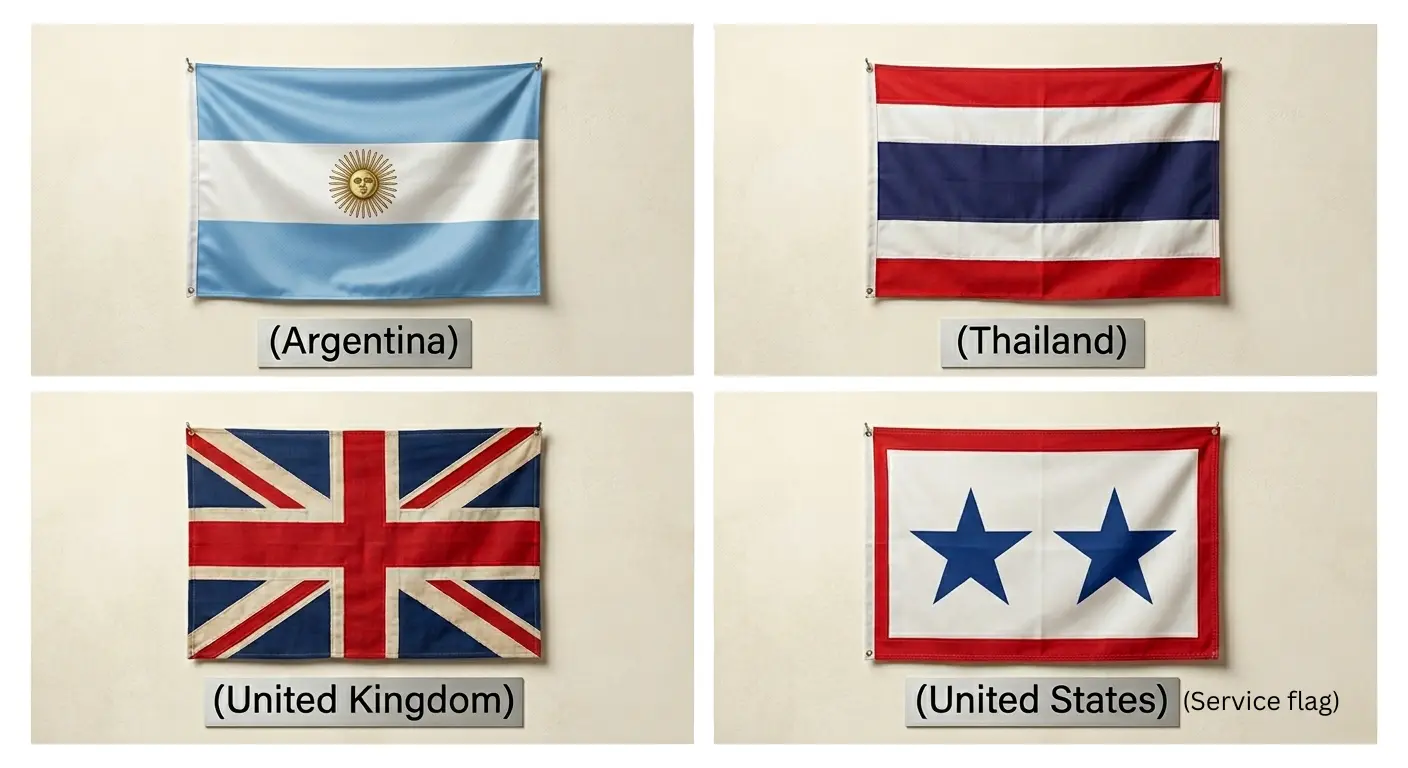
Celebrate Her in Color
If your mother is someone who loves her roots, who is life in full color or is simply someone you know has deserved more than just the usual Sunday/holiday routine this is the year you should do something different.
A flag from her country, her origin or perhaps a bright proclamation flag can make a normal day a day she will never forget. Some things are worth marking. Some people deserve to be cheered loudly and in full color. Wave a flag in her honor. She has more than earned it.
From her home country to the Stars and Stripes, Baldwin Flags carries flags for every mother worth celebrating. Shop now
Mothers Day Was Never About Flowers: The Flag Story Behind It