
Ronald Reagan’s 1964 speech, A Time for Choosing, stands as one of the most important political speeches in modern American history. Delivered on October 27, 1964, in support of Barry Goldwater’s presidential campaign, the speech introduced millions of Americans to Reagan’s clear, confident defense of freedom, limited government, and personal responsibility. More than a campaign speech, it was a statement of belief about the direction of the country and the meaning of the American promise.
At the heart of Reagan’s message was a simple but powerful argument. He rejected the idea that the nation’s future could be understood only through the labels of “right” and “left.” Instead, he said, “There is no such thing as a left or right. There is only an up or down.” Reagan defined “up” as the path of liberty, faith, opportunity, and self-government. He defined “down” as the road toward larger centralized control, reduced individual freedom, and a government that slowly takes the place of personal responsibility. That line gave the speech its lasting force because it framed politics not just as a contest of parties, but as a moral choice about the future of a free people.
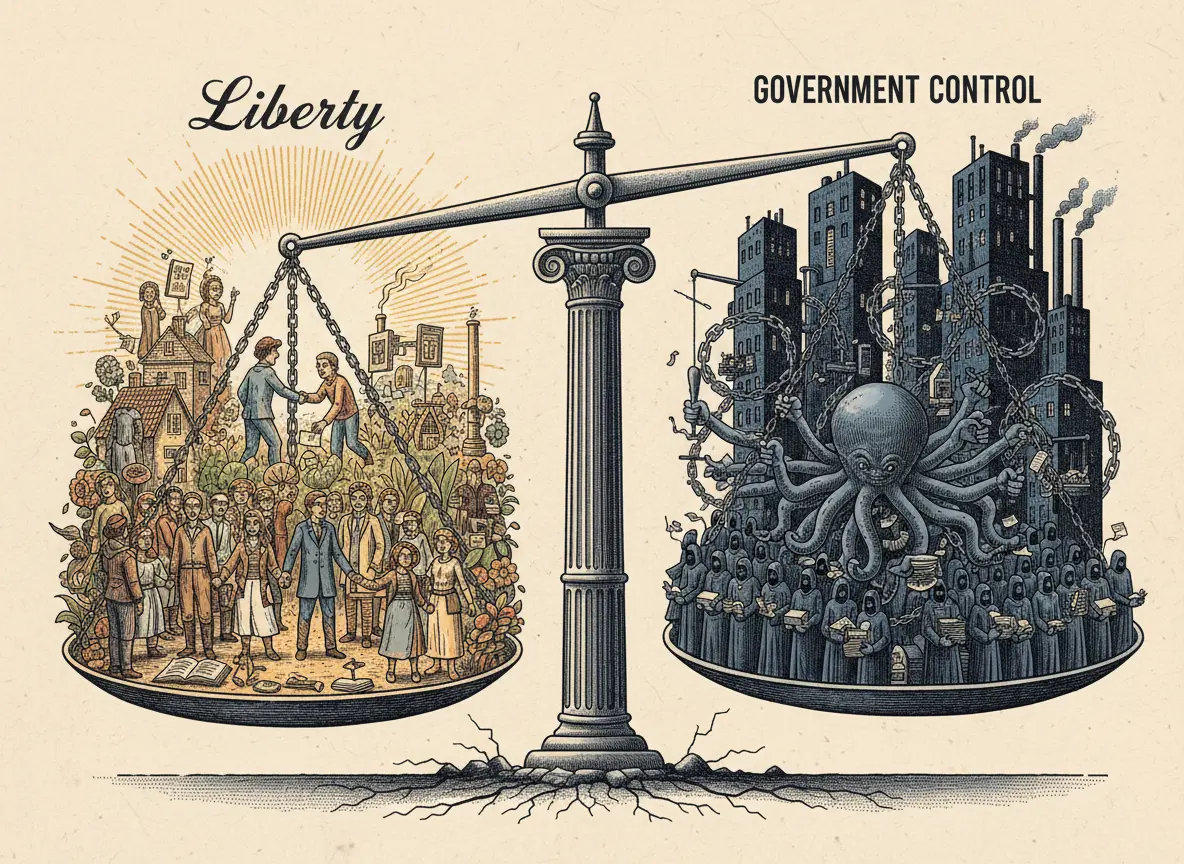
Reagan’s speech came at a time when the Cold War shaped nearly every national debate. Americans were weighing the threat of communism abroad while also debating the growing size and role of the federal government at home. Reagan connected those concerns by arguing that freedom must be defended both overseas and within the nation’s own political life. He warned that when government expands too far into the daily lives of citizens, it does not simply solve problems. It changes the relationship between the citizen and the state. In Reagan’s view, the danger was not only economic inefficiency. It was the slow erosion of independence, initiative, and the habits of liberty.
One reason A Time for Choosing still matters is that Reagan spoke in plain language. He did not bury his message in technical policy talk. He spoke directly about taxes, spending, inflation, national defense, and the rights of citizens. He argued that government programs often promise security but can create dependency when they grow beyond their proper limits. He believed that a free society depends on strong families, local communities, churches, businesses, and civic institutions carrying the main burden of social life. Government, in his view, had an important role, but it was not meant to become the center of everything.
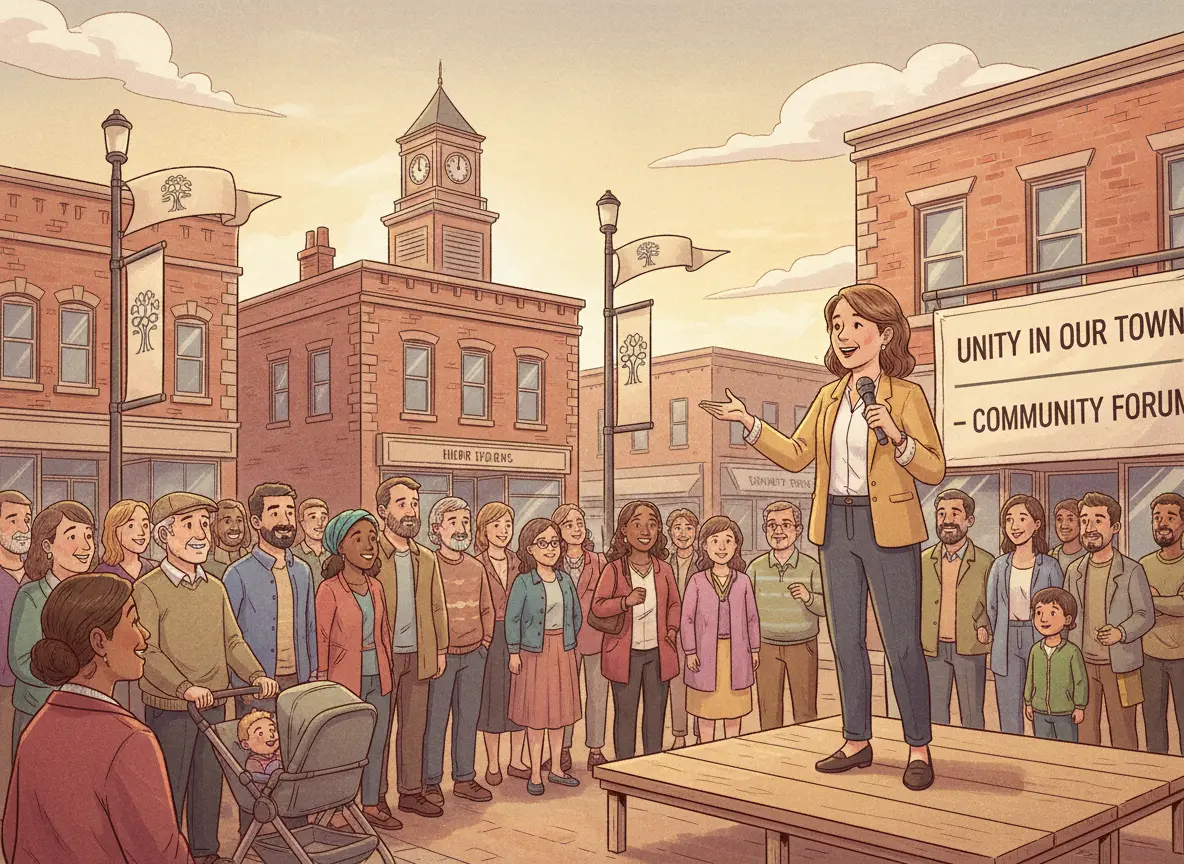
Reagan also understood that political arguments are strongest when they are tied to human dignity. His defense of freedom was not abstract. He believed people flourish when they are trusted to work, build, choose, sacrifice, and govern themselves. That belief shaped his criticism of systems that place too much power in distant institutions. He feared that when citizens begin to look first to government for every answer, they may gain temporary comfort but lose the deeper strength that comes from responsibility and self-rule. In that sense, the speech was not only about economics or elections. It was about character.

Another lasting feature of the speech is its optimism. Reagan warned of serious dangers, but he did not speak as though America was already lost. He believed the nation could still choose freedom if its people had the courage to defend it. That hopeful tone helped set him apart. He called Americans to remember that liberty is never automatic. It must be protected, taught, and renewed by each generation. His words carried urgency, but they also carried confidence that the American people were capable of meeting the moment.
Today, A Time for Choosing continues to resonate because the questions Reagan raised are still with us. How much power should government have? What is the proper balance between security and liberty? When does public help become public dependence? How do we preserve freedom while addressing real national problems? These are not old questions buried in the past. They remain central to public life. Reagan’s speech endures because it pushes citizens to think beyond slogans and ask whether a policy strengthens self-government or weakens it.

Whether one fully agrees with Reagan or not, his 1964 address remains a defining statement of the conservative view of America. It is remembered not just because of one famous line, but because it expressed a full vision of national life rooted in freedom, responsibility, and faith in the American people. In a time when public debate often feels shallow or divided, A Time for Choosing still stands as a reminder that words matter most when they are tied to principle. Reagan challenged the nation to think clearly, choose carefully, and never forget that the future of liberty depends on the choices free people are willing to make.

Ronald Reagan’s “A Time for Choosing” : Right, Left, and the American Idea