
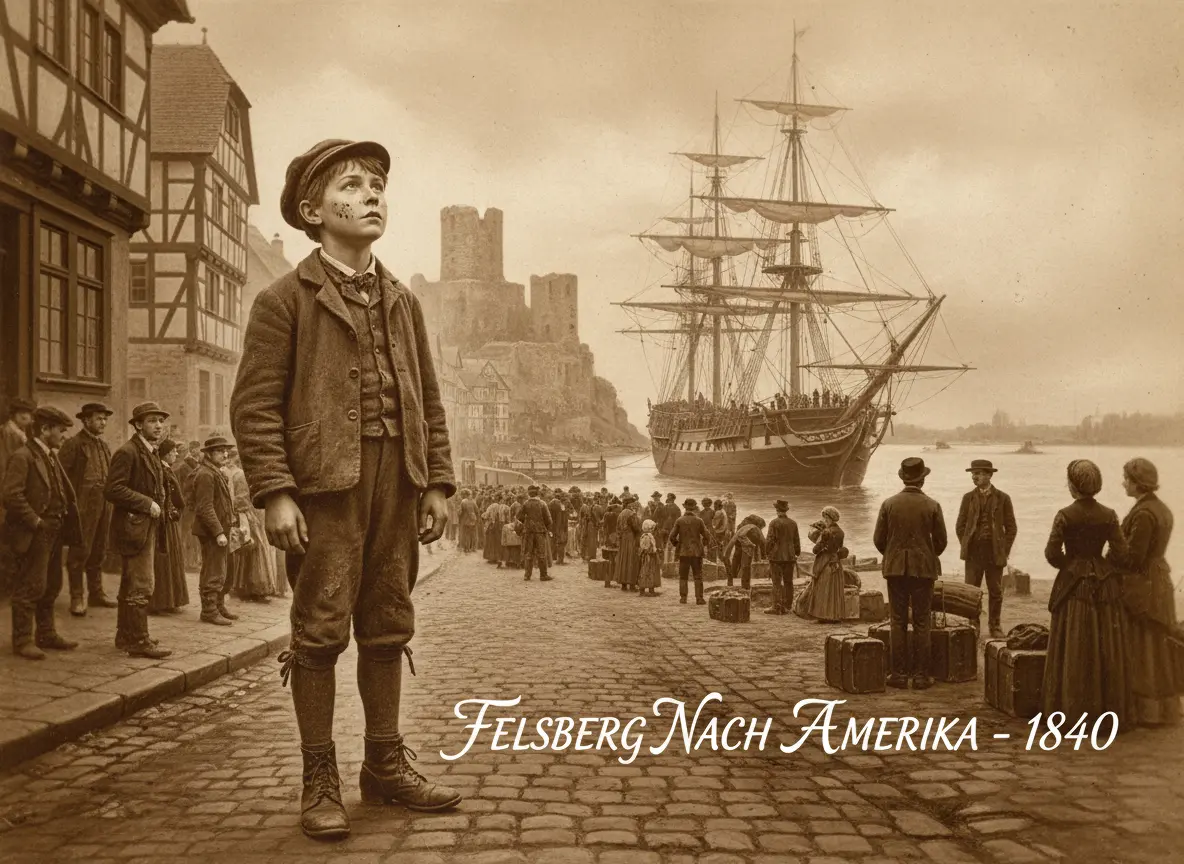
In June 1840, a boy was born in Felsberg, a small village in the Grand Duchy of Hesse, Germany. His name was William J. Archinal. He would grow up an ocean away from the nation that would one day call him to its greatest test. Like millions before and after him, Archinal came to America seeking opportunity and freedom. He settled in Ohio, built a life, and when the Union he had chosen to call home faced its darkest hour, he answered without hesitation.
By August 1861, the American Civil War had been raging for four months. The young German immigrant enlisted in the 30th Regiment Ohio Volunteer Infantry, Company I. He was promoted to Corporal—a mark of trust and leadership. For nearly two years, Archinal served with his regiment through the grinding campaigns of the Western Theater. But his defining moment would come on a single day in May 1863, during one of the war's most pivotal sieges.
The Siege of Vicksburg and the Forlorn Hope
Vicksburg, Mississippi, sat on a bluff overlooking the Mississippi River. Whoever controlled Vicksburg controlled the river—and whoever controlled the river controlled the war's western strategy. Union General Ulysses S. Grant had surrounded the Confederate stronghold, and by May 1863, the siege had tightened into a stranglehold. Confederate soldiers and civilians inside the city were starving. Grant needed to break through the fortifications and end it.
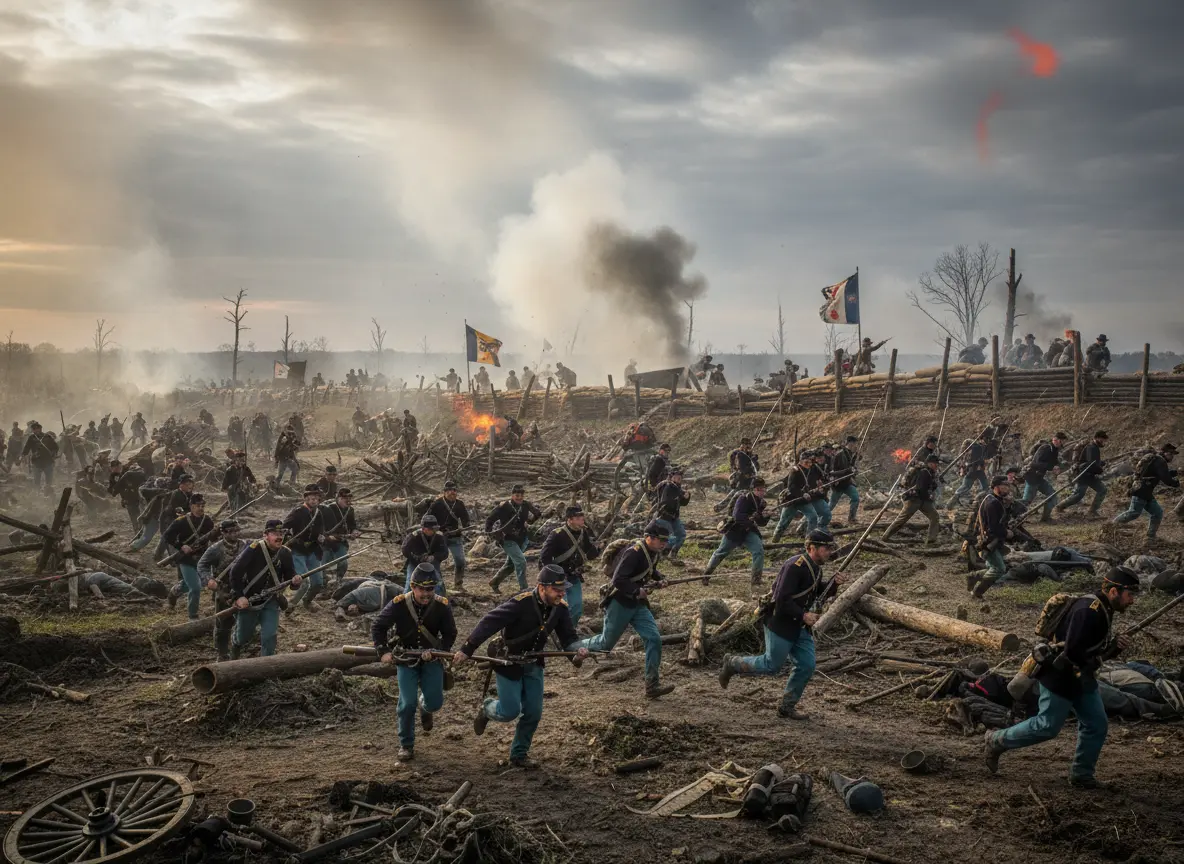
On May 22, 1863, Grant ordered a massive assault on the Confederate lines. It was a desperate gamble. The Union Army would charge directly at heavily fortified positions defended by entrenched Confederate soldiers. The soldiers selected for this assault knew the odds. They called it the "Forlorn Hope"—a military term for a suicide mission, a charge where soldiers would have little chance of surviving.
Corporal William J. Archinal was one of those men selected to charge.
Imagine standing in the morning heat of Mississippi, rifle in hand, knowing that in moments you would run toward cannon fire and rifle volleys. Imagine the weight of that decision—to move forward anyway. That is what Archinal did. That is what 53 men did that day. And that is what only a fraction of them lived to tell about.
The assault was brutal. Confederate artillery and musket fire tore into the charging Union lines. Men fell by the dozens. The survivors pressed forward, some reaching the Confederate earthworks, fighting hand-to-hand in the dirt and smoke. It was chaos and courage mixed together. When the smoke cleared and the survivors were counted, Corporal William J. Archinal was among them—one of only 53 men to survive the Forlorn Hope.
A Medal Delayed, A Legacy Enduring
For his gallantry in that charge—for standing firm when standing meant almost certain death—Corporal Archinal was recommended for the Medal of Honor. But the medal did not come quickly. It took 31 years. On July 10, 1894, more than three decades after that May morning in Vicksburg, the Medal of Honor was finally presented to William J. Archinal. The official citation read simply: "Gallantry in the charge of the 'volunteer storming party.'"
Thirty-one years. That delay speaks to something important about American history. Many of our greatest heroes were not celebrated in their own time. Their sacrifices were often forgotten or overlooked. It took decades for the nation to fully recognize what men like Archinal had given.
After the war, Archinal moved to Trenton, New Jersey, where he lived a quiet life. He served in the Grand Army of the Republic, a veterans' organization. He was involved in Masonic fraternities. He worked. He raised a family—a widow, two sons, and a daughter survived him. He lived to age 79, dying on May 10, 1919, just as America was emerging from another great war.
When he died, a local newspaper ran his obituary. It noted that he was a Civil War veteran, a member of the GAR, connected to the Masonic fraternities. It mentioned his service. But it did not dwell on the Forlorn Hope or the Medal of Honor. By then, Archinal was one of thousands of aging Civil War veterans passing from the earth. His story, like so many others, risked being lost.
The 250-Year Thread
But Archinal's story matters. It matters because it connects directly to America's 250-year journey. When the Founders declared independence in 1776, they did so in the name of "Life, Liberty, and the pursuit of Happiness." They promised a nation where any person—even a boy born in a German village—could come, build a life, and be called upon to defend that promise.
Archinal embodied that promise. He came to America as an immigrant. He became a soldier. He faced death for a cause larger than himself—the preservation of the Union and the principle that this nation could not endure half slave and half free. He survived when others did not. And he lived the rest of his life quietly, without fanfare, as so many of our greatest heroes do.
For 118 years, Baldwin Priesmeyer has been part of America's story. Founded in 1908 by the Chauncey R. Baldwin family, our company has honored the flag that men like Corporal Archinal died to preserve. We have made flags in America, sold flags in America, and installed flags in America. We have served veterans, honored the fallen, and stood alongside communities as they gathered to remember sacrifice.
We are honored to be part of celebrating 250 years of America. And we are honored to tell the stories of men like William J. Archinal—immigrants, soldiers, citizens who answered when their country called.
The Legacy Lives
Corporal Archinal's grave is in Riverview Cemetery in Trenton, New Jersey, in section W, Lot 126. In November 2005, more than 86 years after his death, a government-issue Medal of Honor marker was installed at his gravesite. It was a small gesture of recognition for a man who had waited 31 years for his first medal.
His story reminds us that freedom is not free. It is purchased by the courage of ordinary people who do extraordinary things. It is preserved by immigrants who choose to defend it. It is honored by companies like Baldwin Priesmeyer that have spent more than a century ensuring that the flag under which men like Archinal fought continues to fly with pride and dignity.
As America marks 250 years, we remember Corporal William J. Archinal. We remember the Forlorn Hope. We remember that the promise of 1776 was tested and defended by men who came from every corner of the earth. And we commit ourselves to honoring that legacy—one flag, one story, one act of service at a time.
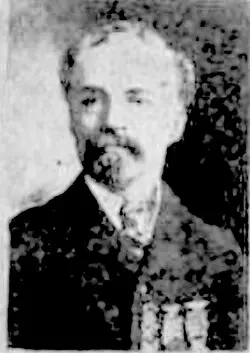
Corporal William J. Archinal (1840-1919), Medal of Honor recipient for gallantry at Vicksburg, May 22, 1863."
Corporal William J. Archinal: The immigrant who answered America's call